Affordable CBD Oil in Canada: A Buyer’s Guide
Key takeaways
- Affordable CBD oil in Canada exists, you just need to know what to check so you don’t end up with something weak or poorly made.
- Concentration and format matter more than brand name or packaging when you’re trying to get value.
- Full-spectrum, broad-spectrum, and isolate are the three main types, they work differently and are priced differently.
- Tinctures tend to give you more CBD per dollar than gummies or capsules.
- Storing your oil properly keeps it good longer, so you’re not wasting what you paid for.
Finding affordable CBD oil in Canada isn’t hard, but finding one that’s actually worth buying takes a few minutes of knowing what to look for. Here’s a plain rundown so you can pick with confidence and not feel like you guessed.
What is CBD oil, exactly?
CBD (cannabidiol) is one of the main compounds found in the cannabis plant. Unlike THC, it doesn’t make you feel high. CBD oil is just CBD extracted from the plant and mixed with a carrier oil, usually something like MCT (coconut-derived) oil or hemp seed oil, so it’s easy to take.
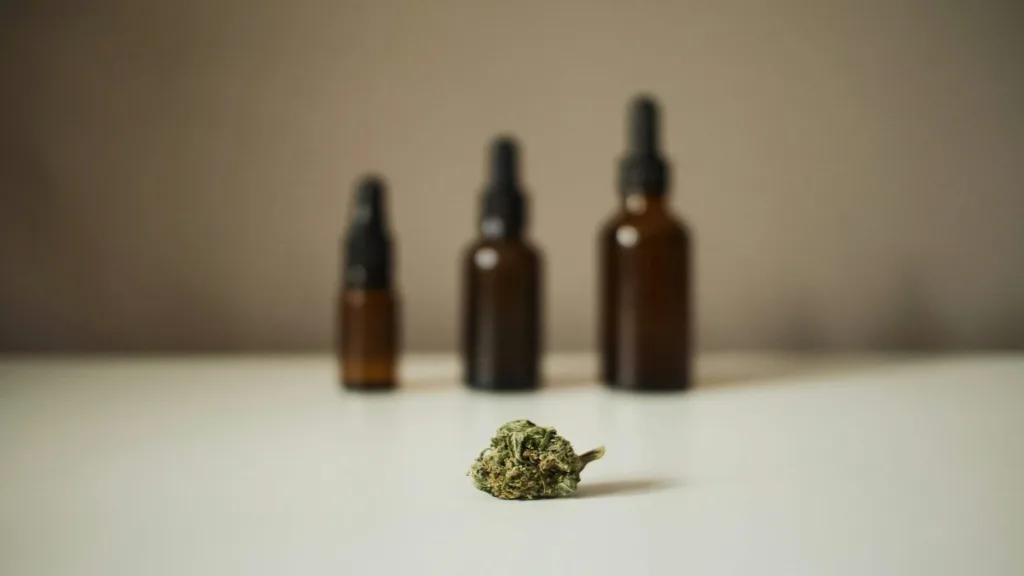
You’ll see it sold as a tincture with a dropper, as softgels, and sometimes in pre-measured capsules. The tincture format is usually the most straightforward way to get it, and for most people it’s also the most affordable per serving. You can browse what we carry in our Tinctures section, or check out our broader CBD Essentials range.
The three types you’ll see on shelves
Most labels say one of three things: full-spectrum, broad-spectrum, or isolate. These aren’t just marketing words, they actually describe what’s inside the bottle.
Full-spectrum
This keeps everything from the plant intact: CBD, other cannabinoids, terpenes (the stuff that gives cannabis its smell and taste), and a trace amount of THC. Many people prefer this because all those compounds work together. It tends to cost a bit more than isolate, but not always by a huge amount.
Broad-spectrum
Same as full-spectrum but the THC has been removed. A good middle ground if you want more than just pure CBD but aren’t looking for any THC at all.
Isolate
Pure CBD, nothing else. It’s usually the cheapest option per milligram, the taste is milder, and it mixes well into things. If you’re new to CBD and just want to try it without variables, isolate is a reasonable starting point.
How to actually compare products on price
The sticker price on a bottle doesn’t tell you much on its own. A small bottle at a low price might have very little CBD in it, while a higher-priced bottle might actually be cheaper per milligram. You want to look at the total milligrams of CBD listed on the package, then divide that by the price.
Here’s a simple example:
| Bottle | Total CBD | Price | Rough cost per 100mg |
|---|---|---|---|
| Bottle A | 500mg | $30 | $6.00 |
| Bottle B | 1000mg | $45 | $4.50 |
| Bottle C | 250mg | $25 | $10.00 |
Bottle C looks cheap until you do the math. Bottle B gives you the most CBD for your dollar here, even though it costs more upfront. That’s the move, look at what you’re actually getting, not just the shelf price.
What makes one oil better than another?
Honestly, a few things. The carrier oil matters a little, MCT oil is absorbed easily and is the most common. Flavour is worth thinking about too, because if you hate the taste you won’t use it. Some oils are plain, some are mint or citrus flavoured, and some have a strong earthy hemp taste that not everyone is into.
Third-party testing is the other thing to look for. A product that has been tested by an outside lab (and shows you the results, usually called a Certificate of Analysis or COA) is a product you can trust a bit more. It tells you the CBD content matches what’s on the label, and that there’s nothing unexpected in there. You can read Health Canada’s overview of cannabinoids if you want a broader look at what’s known about them.
CBD oil vs. other CBD formats
If you’ve looked at Gummies & Edibles in the CBD space, you’ve probably noticed they cost more per milligram of CBD than a straight tincture does. That’s because you’re paying for the format, the gummies themselves, the flavouring, the packaging. They’re convenient and easy to use, which is worth something. But if you’re watching what you spend, a plain oil or tincture is almost always a better deal on a per-milligram basis.
Capsules are similar, convenient, but a bit pricier than tinctures for the same amount of CBD. Pick the format that fits your routine, just know what you’re trading off.
How to store CBD oil so it lasts
This is one of the most overlooked parts of getting value out of what you buy. CBD oil degrades when it’s exposed to heat, light, or air. A bottle left on a sunny windowsill or near a hot stove will go off faster than one kept somewhere cool and dark.
The practical tips are simple: keep the cap tight, store it in a cupboard or drawer away from heat, and use it up within a reasonable time after opening. Most bottles list a best-before date, that date assumes proper storage. A fridge works well too, especially for bottles you won’t finish quickly. The oil might go cloudy when cold, but it clears up at room temperature and that’s totally fine.
Good starting points if you’re new to CBD oil
If you’ve never used it before, a mid-strength isolate tincture is a solid place to start. The taste is mild, it’s straightforward, and you’re not dealing with THC at all. Once you know how your body responds to it and what serving size feels right for you, you can move up to a full-spectrum option if you’re curious about the difference.
And if you’re open to other forms of CBD cannabis, our Value Flower section has high-CBD strains that are worth a look for a different experience altogether.
Tip: Check the total milligrams on the label before anything else. Two bottles can look nearly identical on the shelf and have very different amounts of CBD inside. That number is the most important thing on the package.
Frequently asked questions
Is CBD oil legal to buy in Canada?
Yes, you can buy CBD oil in Canada from licensed cannabis retailers. Products need to comply with packaging and labelling rules, so what you get from a proper retailer is regulated and labelled clearly.
What’s a reasonable amount of CBD in a bottle?
It varies quite a bit. You’ll find bottles ranging from a couple hundred milligrams up to a few thousand. For everyday use, something in the 500mg to 1000mg range is a practical starting point for most people. Higher concentrations just mean each drop has more CBD in it.
Does CBD oil expire?
Yes. Most oils are good for a year or two from the production date if stored properly. Heat, light, and air speed up the breakdown, so where you keep it makes a real difference.
Will CBD oil make me high?
No. CBD doesn’t produce a high. If the product is a CBD isolate or broad-spectrum, there’s no THC in it at all. Full-spectrum products have a trace amount of THC but not enough to produce any psychoactive effect.
Is a more expensive CBD oil always better?
Not automatically. Price is partly about concentration, partly about format, and sometimes about branding. A less expensive isolate from a reputable producer with third-party testing can be just as solid as a pricier bottle. Do the milligrams-per-dollar calculation and check for that COA.
Can I use CBD oil with other cannabis products?
Most people do, yes. It’s common to use a CBD tincture on its own or alongside other products. Just be mindful of the overall THC in whatever else you’re using, since that’s the part that has an effect on how you feel.