Cannabis and Pets: Keeping Them Safe
Key takeaways
- Cannabis and pets are a genuinely risky mix, dogs, cats, and other animals are much more sensitive to THC than people are.
- Edibles are the biggest hazard at home because they’re easy to get into and can contain extra ingredients that are toxic to animals.
- Secure storage is the most practical thing you can do right now to protect your pets.
- If your pet gets into your stash, call a vet right away, don’t wait to see how it plays out.
- CBD products are made for people, not animals, so don’t give a pet your stuff.
Cannabis and pets don’t mix well, and THC is the main reason why. Animals, dogs especially, process THC very differently from humans, and it doesn’t take much to make them seriously unwell.
Every cannabis user who has a pet at home should know this, because most problems happen by accident and are completely preventable.
Why pets and THC are a bad combination
Your dog’s or cat’s body handles THC much more intensely than yours does. The short version: dogs have more cannabinoid receptors in their brains than people do, so the same amount of THC hits them a lot harder. A small amount that barely affects you can leave a dog wobbly, glassy-eyed, drooling, or unable to stand.
Cats can also be affected, though they tend to be pickier about what they eat. Small animals like rabbits and birds are also sensitive. Realistically, dogs are the ones who get into trouble most often because they’ll eat almost anything.
Signs that a pet may have got into cannabis can include:
- Wobbly walking or loss of balance
- Glassy or slow eyes
- Drooling or vomiting
- Seeming very out of it or unresponsive
- Trembling or, in more serious cases, shaking fits
If you see any of these signs and you have cannabis at home, call your vet immediately and tell them what happened. Be straight with them. They need the full story to help your pet.
Edibles are the biggest danger at home
Flower or loose bud isn’t great for a pet to get into, but edibles are the bigger problem. A chocolate brownie with THC in it is a double threat: THC plus chocolate, and chocolate is genuinely toxic to dogs on its own. Some gummies and other edibles contain xylitol (an artificial sweetener), which is also dangerous for dogs. Any edible made for humans can have ingredients that compound the harm.
Edibles also tend to smell appealing to an animal and look just like a snack. A dog doesn’t know the difference between your gummies and regular candy, and they’ll eat both given half a chance.
Tip: Edibles stored loosely in a bag on a low shelf or in a bag left on the couch are the most common culprits. A smell-proof, pet-proof container up high makes a real difference.
Cannabis and pets: how to actually keep them safe
The fix is mostly just storage. It’s not complicated, but it does need to be consistent.
Store everything out of reach
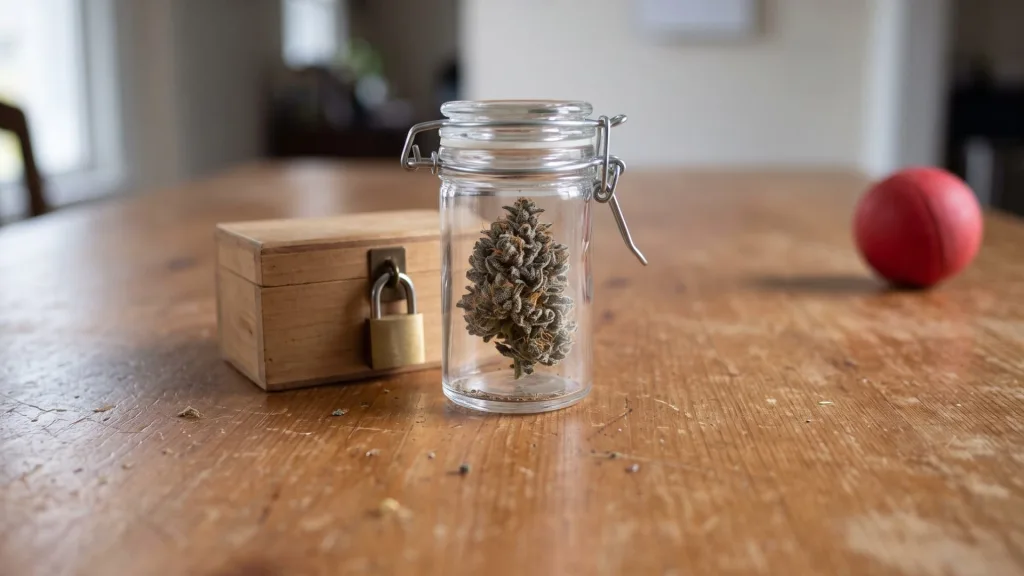
High shelves, locked boxes, or airtight containers that a paw or snout can’t open. Dogs can be surprisingly determined, especially if something smells interesting. Our plain guide on Storing Cannabis Safely at Home covers the practical options in detail, a lot of it applies directly to keeping pets out too.
Don’t leave anything out
A joint in an ashtray, a half-eaten edible on the coffee table, a grinder left open, these are all accessible to a curious dog or cat. Make it a habit to put things away properly every time, not just most of the time.
Be careful with second-hand smoke
Hotboxing a small room with a pet in it isn’t a good idea. Animals can inhale smoke too, and a small space concentrates it fast. Smoke outside or in a well-ventilated area if your pets are around.
Concentrates and oils need special attention
Concentrates are much more potent than flower. Tinctures and oils can spill and get licked up off surfaces. Same rule applies: sealed containers, stored up high, away from where animals can reach.
What about CBD products?
CBD is a different cannabinoid from THC, and some pet owners ask whether human CBD products are okay to give to an animal. The straight answer is: don’t. Products like the ones in our CBD Essentials range are made for adult humans, formulated with human use in mind, and often include other ingredients that may not be safe for animals.
If you’re curious about CBD for your pet specifically, talk to your vet first. Don’t share your own.
What to do if your pet gets into your cannabis
Act fast. Don’t wait to see if they seem fine in an hour. Call your vet or an emergency animal hospital right away, and tell them exactly what happened, what the animal got into, roughly how much, and when. The more information the vet has, the better they can help.
Most healthy adult dogs recover from cannabis exposure with supportive care, but it can take many hours and it’s not comfortable for them. Smaller animals, puppies, older dogs, and animals with existing health conditions can be hit harder.
Don’t try to treat it yourself at home unless a vet specifically tells you to do something. Inducing vomiting in a pet is not always safe and can make things worse depending on what was ingested.
A quick look at the risks by product type
| Product type | Risk level for pets | Main concern |
|---|---|---|
| Flower / bud | Moderate | THC exposure if eaten or heavily inhaled |
| Edibles (gummies, baked goods) | High | THC plus potentially toxic ingredients (chocolate, xylitol) |
| Concentrates / oils / tinctures | High | Very potent, can spill and be licked up easily |
| Topicals (CBD creams, rollers) | Lower, but not zero | Can be licked off skin; keep applied areas covered |
| Second-hand smoke | Low to moderate | Worse in small, unventilated spaces |
Frequently asked questions
Can a pet die from eating cannabis?
It’s rare in healthy adult dogs, but it’s possible in severe cases, especially with very potent products or in small animals. The bigger risk is that a pet is in serious distress and suffering while you wait to see what happens. Always call a vet immediately rather than hoping it passes.
My dog ate a small amount. Do I still need to call a vet?
Yes. You don’t know exactly how much THC was in what they ate, and small dogs or those with health issues can be affected more seriously. Let the vet make that call, not you.
Is second-hand smoke actually a problem if I smoke near my pet?
It can be, especially in a small or enclosed space. Occasional exposure in a ventilated area is a much lower risk, but regularly smoking around your pet in a closed room isn’t a good idea.
What about cannabis topicals, are those dangerous if a pet licks them?
They’re generally a lower concern than edibles or concentrates, but it’s still worth keeping pets from licking any area where you’ve applied a topical. Most topicals have other ingredients too, like essential oils, that aren’t meant to be ingested by animals.
Can I give my pet the same CBD products I use?
No. Human CBD products aren’t formulated for animals and may contain ingredients that aren’t safe for them. If you’re thinking about CBD for a pet, talk to your vet first.
Is it safe to store cannabis in a regular zip-lock bag if it’s in a high cupboard?
A high cupboard helps, but zip-lock bags aren’t smell-proof and determined dogs have been known to find ways to get to things that smell interesting. A sealed, airtight container is more reliable. Check out our guide on Storing Cannabis Safely at Home for practical options.