A Plain-English Cannabis Glossary
Key takeaways
- A cannabis glossary helps you understand what you’re actually buying before you place your order.
- The big terms to know are THC, CBD, indica, sativa, hybrid, terpenes, and cannabinoids.
- Flower, edibles, vapes and concentrates all work differently, so the product type matters.
- Grade labels like AA and AAA are a rough, informal shorthand for quality, not an official ranking system.
- Once you know the basics, reading a label or asking questions gets a lot less stressful.
A cannabis glossary is just a list of the words you’ll hear in a shop, explained in plain language so you’re not nodding along pretending you know what “terpene profile” means. That’s what this is. No fluff, just the terms that actually come up.
If you’re new to all this, our beginner’s guide to cannabis is a good place to start before or after you read through this one.
The core words everyone should know
THC
THC is the part of cannabis that gets you high. It’s a chemical compound, technically called a cannabinoid, and it’s the main reason most people feel anything at all from weed. The percentage listed on a label tells you roughly how much THC is in the product by weight. Higher doesn’t always mean better, especially if you’re newer to it. There’s a full guide to what THC percentage means if you want more detail.
CBD
CBD is another cannabinoid. It doesn’t get you high, but a lot of people use it on its own or alongside THC. You’ll see CBD-heavy products labelled with a CBD percentage instead of, or in addition to, a THC percentage. If you’re curious, you can browse our CBD products.
Cannabinoids
This is just the umbrella word for all the active compounds in cannabis. THC and CBD are the most well-known, but there are others (CBG, CBN and more). You don’t need to memorize all of them. Just know that when someone says “cannabinoids,” they mean the chemical stuff in the plant that actually does something.
Terpenes
Terpenes are what give cannabis its smell. They’re the oils that create the scent in all kinds of plants, not just weed. In cannabis, they’re also part of why different strains feel different to people, even if the THC percentage is similar. A piney, earthy smell comes from different terpenes than a sweet, fruity one. When a budtender talks about a strain smelling gassy or citrusy, they’re really talking about terpenes.
Strain / Cultivar
A strain is just a variety of cannabis plant. You’ve probably heard names like Blue Dream, OG Kush, or Wedding Cake. These are all strains. You might also see the word “cultivar”. Same thing, just more technical. The strain name gives you a rough idea of the smell, taste, and kind of experience you might expect.
Indica, sativa, and hybrid
You’ll see these three words everywhere. Here’s what they’re supposed to mean and what they actually mean in practice.
Indica strains are traditionally described as heavier and more settling, the kind of thing people reach for in the evening. Sativa strains are usually described as more uplifting or head-focused. Hybrid means a mix of both.
These labels are a rough starting point. Two indicas from different growers can feel pretty different from each other. Terpenes and your own body play a big role. Use indica/sativa as a rough guide when you’re picking something, but don’t treat it like a rule.
Product type terms
Flower
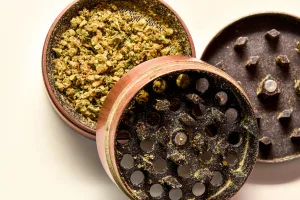
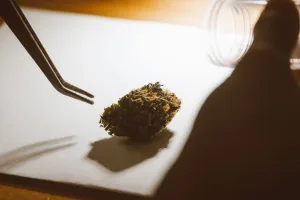
Flower is just the bud you smoke. It’s the most straightforward product type. You can roll it into a joint, pack it into a pipe or bong, or use a dry herb vaporizer. Flower is usually sold by the gram or the ounce.
Pre-roll
A pre-roll is a joint that’s already been rolled for you. That’s it. Some are single strain, some are infused with concentrates to bump up the THC. Check the label so you know what you’re getting.
Edibles
Edibles are any food or drink product that contains cannabis. Gummies are the most common. The main thing to know about edibles is that they take longer to kick in than smoking or vaping, often an hour or more. Start low, go slow.
Vapes
A vape or vape cartridge contains cannabis oil that you inhale through a small device. It’s faster-acting than edibles. Disposable vapes are all-in-one and get thrown away when they’re empty. Cartridges attach to a reusable battery.
Concentrates
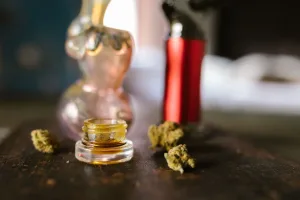
Concentrates are exactly what they sound like, a more concentrated form of cannabis. They come in different textures: shatter, wax, live resin, hash. They’re usually much stronger than flower, so they’re not the typical starting point for newer people.
Tinctures
A tincture is a liquid cannabis extract, usually taken under the tongue or added to a drink. They tend to be popular with people who want more control over how much they’re taking.
Quality grades: AA, AAA, and AAAA
These letter grades are used to describe the quality of dried flower. They’re informal shorthand for how the bud looks, how it smells and how well it’s trimmed, and what each letter means is set by whoever’s selling it.
| Grade | What it generally means | Who it’s for |
|---|---|---|
| AA | Decent everyday bud, does the job | Casual, everyday smoking |
| AAA | Better trim, stronger smell, more consistent buds | Most regular buyers |
| AAAA | Top-shelf, very well-grown, premium price | Those who want the best available |
AA flower is decent everyday bud. It’s not as neatly trimmed as the higher grades, but it does the job. You can browse our value flower.
Label terms you’ll actually see
THC % / CBD %
The percentage of THC or CBD in the product by weight. On flower, this is measured on dry weight. On edibles, you’ll see milligrams (mg) instead, which is the total amount in the whole package or per piece.
Total THC vs. THC
Some labels show both. “THC” is the active form already in the product. “Total THC” accounts for a compound called THCA that converts to THC when it’s heated. For flower you’re going to smoke, total THC is the more useful number.
Net weight / Lot number
Standard label info. The lot number is for traceability. Net weight tells you how much you’re getting. Our guide to reading a cannabis label covers everything on a real label if you want the full picture.
Myth: Higher THC always means a better or stronger experience. Not necessarily. How a product feels depends on terpenes, cannabinoid mix, your own tolerance, and how you consume it. THC percentage is one piece of the picture, not the whole thing.
A few more terms worth knowing
Decarboxylation
A mouthful of a word for a simple idea: heating cannabis activates the THC. That’s why raw flower doesn’t get you high if you just eat it, it needs heat first. Smoking, vaping, and baking all involve decarboxylation.
Full spectrum vs. broad spectrum vs. isolate
You’ll mostly see these on CBD and oil products. Full spectrum means the product contains multiple cannabinoids, including a small amount of THC. Broad spectrum means multiple cannabinoids but no THC. Isolate means it’s just one pure compound, usually CBD.
Onset / Duration
Onset is how fast you feel something. Duration is how long it lasts. Smoking and vaping have a fast onset, a few minutes. Edibles are much slower but tend to last longer. Worth knowing before you make a decision on what to buy.
Frequently asked questions
What’s the difference between indica and sativa?
Indica is generally described as heavier and more body-focused, sativa as more uplifting and head-focused. In practice, these categories are a rough guide. Terpenes and the specific strain matter just as much, if not more.
What does THC percentage actually tell me?
It tells you the concentration of THC in the product. A higher number generally means more potency, but it’s not the only thing that shapes the experience. If you want more detail, read our guide to what THC percentage means.
What’s a terpene and do I need to care about it?
Terpenes are the compounds that create the smell and flavour of weed. They’re worth paying attention to because many people find that smell is actually a decent indicator of whether they’ll enjoy a strain. If something smells good to you, that’s useful information.
What’s the difference between AA and AAA flower?
AA is solid, everyday bud at a lower price, great for regular use or buying in bulk. AAA tends to have a stronger smell, better-looking buds, and a more consistent grow. Both are real cannabis, just at different tiers.
Are edibles stronger than smoking?
Not exactly stronger, but the experience is different. Edibles take longer to kick in and the effects tend to last longer. It’s easy to take too much if you don’t wait long enough, so start low, go slow.
What does “full spectrum” mean on a CBD product?
It means the product contains multiple cannabinoids from the plant, including a trace amount of THC. If you want no THC at all, look for “broad spectrum” or “isolate” on the label instead.