What Is CBD? A Plain-Language Guide for Everyday Cannabis Shoppers
Key takeaways
- CBD is a naturally occurring compound in cannabis that doesn’t get you high on its own.
- It’s different from THC, which is the part that produces the high most people associate with weed.
- CBD shows up in flower, oils, gummies, capsules, and vapes, so there are plenty of ways to try it.
- The ratio of CBD to THC on a label tells you a lot about what kind of experience to expect.
- Higher CBD doesn’t automatically mean stronger or better, it depends what you’re looking for.
CBD, short for cannabidiol, is one of the main compounds found in cannabis. It won’t get you high on its own, but it’s a big part of why different products feel different from one another.
What is CBD, exactly?
Cannabis plants contain a whole bunch of naturally occurring compounds. THC is the famous one because it’s what gets you high. CBD is another one, and it’s found in pretty much every cannabis plant, though the amount varies a lot depending on the strain.
The short version: CBD and THC are both cannabinoids, meaning they’re part of the same family of compounds, but they work differently in your body. THC is what produces that classic stoned feeling. CBD doesn’t do that on its own. Many people describe CBD-forward products as feeling more clear-headed or subtle compared to high-THC options. Knowing which one you’re dealing with makes shopping a lot easier. If you want more on the THC side, our guide on what THC percentage means covers that number in detail.
Where does CBD come from?
CBD comes from the cannabis plant, same as THC. Some strains are naturally high in CBD and low in THC. Others are the opposite. And plenty sit somewhere in between, with a meaningful amount of both.
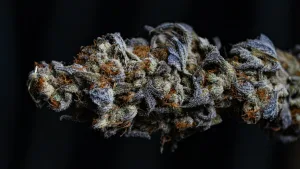
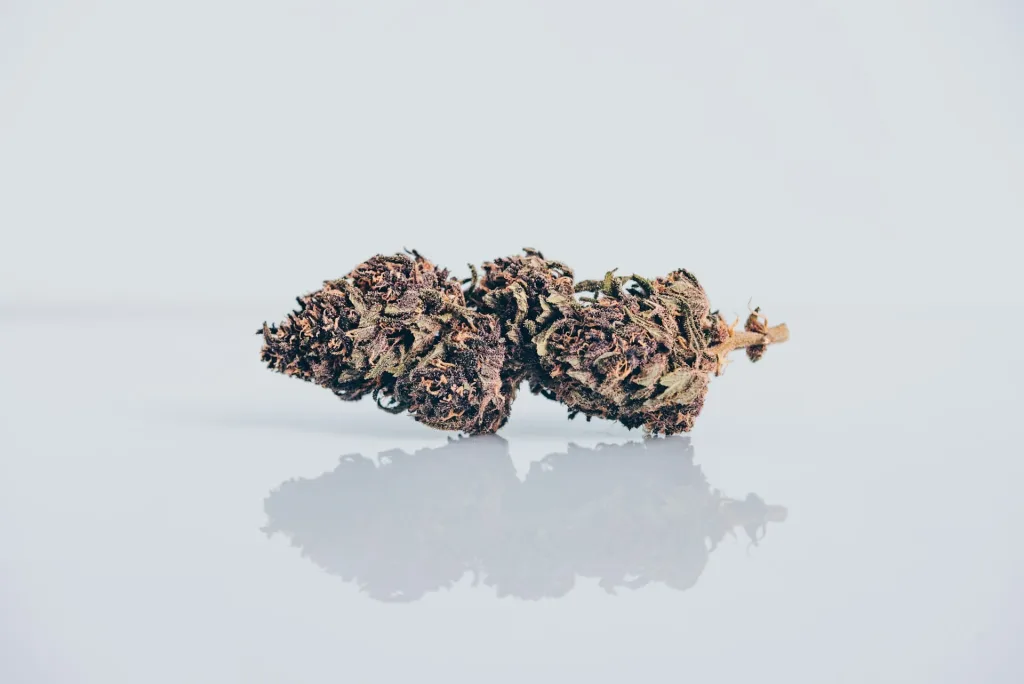
Hemp is cannabis with very little THC, and some of it is grown for CBD. A lot of the CBD oils and capsules you see on shelves are made from hemp-derived CBD. Cannabis flower you’d buy as bud can also be high in CBD, though it’s less common than high-THC strains. When you see something labelled “CBD flower” or “high-CBD,” it just means the plant it came from had more CBD than THC.
How does CBD actually work?
Your body has a system called the endocannabinoid system (ECS for short). It’s a network of receptors spread through your brain and body that helps regulate all kinds of things. THC binds tightly to those receptors, which is why the high hits the way it does.
CBD works differently. It interacts with the same system but in a less direct way, and that’s generally why it doesn’t produce an obvious high on its own. It’s a bit like the difference between pressing a button and just resting your hand near it.
What’s also worth knowing is that CBD and THC can influence each other when they’re both present. Many people find that having some CBD alongside THC makes the overall experience feel a bit smoother or less intense. That’s part of why the CBD to THC ratio on a product matters so much.
What does a high-CBD product actually feel like?
This one’s hard to pin down because everyone’s different. That said, products with a lot of CBD and very little THC are commonly described as subtle. You might notice something, or you might feel not much at all, depending on the product and your own body. A 1:1 product (equal parts CBD and THC) tends to feel noticeably different from something that’s almost pure THC, with many people describing it as a softer, more balanced experience.
Pure CBD products with no THC are the least likely to produce a classic cannabis high. They’re often chosen by people who are curious about cannabis but aren’t sure they want the full THC experience, or by people who want something they can use during the day without feeling out of it.
Tip: If you’re new to all of this, a high-CBD or balanced product is often a good starting point. Less chance of an overwhelming first experience.
What kinds of CBD products are out there?
CBD shows up in a lot of different formats. Here are the most common ones you’ll see on shelves:
- Flower/bud: High-CBD strains you can smoke or vape. Usually labelled with both CBD and THC percentages.
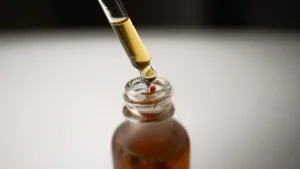
- Oils and tinctures: Liquid CBD you drop under your tongue. Tends to kick in faster than edibles.
- Gummies and edibles: Pre-portioned and a popular choice for people who don’t want to smoke anything.
- Capsules: Similar to edibles in how they work, just in pill form. Consistent and easy.
- Vapes: Fast-acting, no combustion. A good option if you want something quick without rolling anything.
Each format hits differently in terms of how fast you feel it and how long it lasts. Edibles and capsules take longer to kick in (often 30 minutes to two hours) because they go through your digestive system. Vaping and smoking are faster because the compounds go straight to your lungs. Oils dropped under your tongue fall somewhere in between.
Reading a CBD label without getting confused
When you’re looking at a product, you’ll usually see CBD and THC listed as a percentage or as milligrams per serving. Here’s a quick way to make sense of it:
| What you see on the label | What it means in plain terms |
|---|---|
| High CBD, very low or no THC | Unlikely to get you high; subtle experience |
| Equal CBD and THC (1:1 ratio) | Balanced; softer high than pure THC products |
| Low CBD, high THC | Closer to a standard cannabis high |
| CBD only (isolate) | No THC at all; won’t produce a high |
Getting comfortable reading labels makes a real difference. In our guide on how to read a cannabis label, we break down what the numbers and terms mean.
Myth: More CBD is always better. Not true. The right amount of CBD depends entirely on what you’re going for. Someone who wants a mellow, low-key session might prefer a 1:1 product over a pure CBD one. There’s no universal “strongest is best” here.
A few things worth knowing before you buy
Quality and labelling vary from product to product. Here’s what to check before you grab something off the shelf:
- Look for products that clearly show both CBD and THC content on the label. If it’s vague, that’s a flag.
- Think about format first. How do you want to take it? If you’ve never smoked, an oil or gummy might suit you better than flower.
- Consider the ratio. If you’re not sure you want any high at all, go for something with minimal or no THC.
- Start low, go slow. That’s true for most cannabis products, but especially for edibles.
If you’re newer to cannabis in general, our Cannabis for Beginners guide is a solid place to start before you get into specific products.
Ready to have a look? Browse our CBD Essentials.
Frequently asked questions
Does CBD get you high?
On its own, no. CBD doesn’t produce the high that THC does. If a product has both CBD and THC, the THC is still what’s driving any intoxicating effect. A product that’s CBD-only won’t get you high.
What’s the difference between CBD and THC?
Both are cannabinoids found in cannabis, but they work differently. THC is what gets you high. CBD doesn’t on its own. They can also influence each other when both are present in a product.
What’s a good CBD to THC ratio for a beginner?
A lot of beginners find a higher-CBD, lower-THC product easier to start with because the experience tends to be gentler. Our guide on how to read a cannabis label can help you make sense of the numbers.
Is CBD flower the same as regular weed?
It’s cannabis flower, so it looks and smells similar to regular bud. The difference is the ratio of compounds inside it. CBD flower is bred to have more CBD and less THC, so the experience is different from a high-THC strain.
Can I use CBD products during the day?
Many people do, especially with products that have little to no THC. That said, how a product affects you is personal. If you’re trying something new, it’s worth starting at a time when you don’t need to be sharp or drive anywhere, just to see how you respond.
Where can I find CBD products at Pacific Greens?
Your best starting point is our CBD Essentials section, or just send us a message and we’ll point you to the right spot.